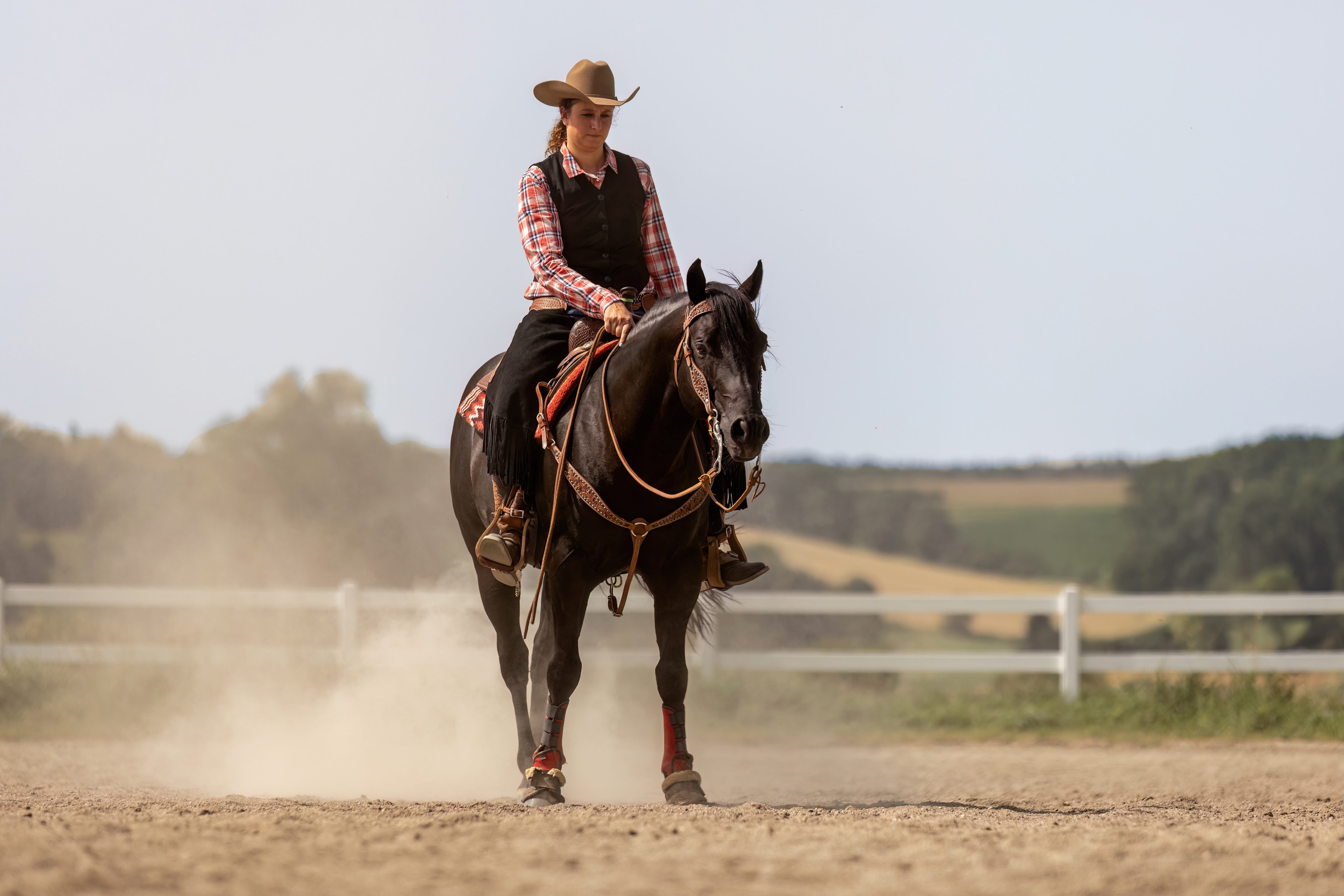
Western Dressage — Where Softness Meets Structure
We look at why this style of schooling can make horses calmer, straighter, and more rideable in everyday life
Western dressage has a funny reputation in the UK. People either assume it’s “dressage in a western saddle” (true, but incomplete), or they dismiss it as a niche American import.
In reality, western dressage is one of the most useful bridges we’ve got between two worlds - the love of correct schooling and the western tradition of lightness, self-carriage, and a horse that stays mentally with you.
If you’ve ever wanted your horse to feel more rideable — calmer, straighter, more adjustable, less reliant on your hand — western dressage is worth a look.
The goal isn’t to ride with less care — it’s to ride with more harmony because the horse understands the job.
So what actually is western dressage?
Western dressage developed as riders looked for a way to measure and reward the same fundamentals that make any horse more rideable: rhythm, balance, straightness, softness, and correct use of the body.
Historically, western riding has always included schooling—just often with different priorities and a different visual style. The western tradition values a horse that is practical, responsive, and emotionally steady: a horse you can ride all day, in company, in open spaces, and in changing situations.
At the same time, classical dressage offers something powerful: a structured, progressive training system and a test format that makes improvement visible over time.
Western dressage emerged as a bridge between those two strengths:
Classical principles provided the gymnastic “why” (how correct work develops soundness, balance, and longevity).
Western presentation kept the “how” grounded in lightness, self-carriage, and a calmer, less busy ride.
As the discipline matured—particularly in North America—organisations began formalising tests, judge education, and show standards. That structure helped western dressage travel: once you have a common set of tests and judging criteria, riders in different regions can train toward the same basics and compare like with like.
At its core, western dressage is classical dressage principles (rhythm, relaxation, connection, straightness, impulsion, collection) expressed through a western way of going: a quieter picture, lighter contact, and an emphasis on the horse carrying himself.
It’s not about “going slow” or “looking western.” It’s about:
A horse that stays in a consistent tempo without being held together
A frame that comes from the hind end and the back, not the rider’s hand
Clear, simple aids that the horse understands
A partnership that feels easy and confident, not tense and busy
In other words: correct work, expressed in a way that prioritises the horse’s mental state as much as the biomechanics.
Why it suits UK horses (and UK lives)
Most of us aren’t riding six days a week in a purpose-built arena with a trainer on the fence. We’re fitting schooling around weather, daylight, work, and whatever our horse has decided is terrifying this week.
Western dressage tends to reward:
Consistency over intensity (short, repeatable sessions)
Clarity over complexity (patterns and transitions that make sense to the horse)
Self-carriage over “holding” (a horse that stays with you on a looser rein when he’s ready)
That makes it a very practical framework for real-world riding — not just the show ring.
Precision for clarity and softness
If you’re used to thinking “more contact = more control,” western dressage can feel like a mindset shift.
The goal is not to abandon contact altogether. It’s to build a horse that can carry the contact lightly, then gradually need less of it because balance and understanding improve.
A good western dressage ride often feels like:
You ask once, clearly
The horse tries
You soften and reward
You repeat until the horse goes, “Oh — that’s the job.”
That’s not permissive. It’s precise.
Where western dressage sits in the bigger horsemanship conversation
One of the reasons western dressage has grown internationally is that it gives riders a shared language.
Riders who come from classical dressage recognise the progressive training scale and the emphasis on correctness.
Riders who come from western backgrounds recognise the priority placed on lightness, self-carriage, and a horse that stays mentally with the rider.
In practice, it rewards training that looks like:
Clear, repeatable patterns and transitions
Timely release and reward
A steady rhythm before you chase outline
Straightness before you ask for more expression
It’s not “western vs English.” It’s a framework for good schooling.
For the UK rider who does a bit of everything — hacking, schooling, clinics, maybe the odd show — it can be a genuinely useful framework for building a partnership and having a focus with your horse.
Common misconceptions (quickly, because we’ve all heard them)
“It’s just for western breeds.”
Not at all. Any horse can benefit from better rhythm, straightness, and balance.
“It’s slower and lazier than ‘proper’ dressage.”
Correct work is correct work. The difference is often in the picture — quieter hands, less visible riding, and a bigger emphasis on the horse staying mentally settled.
“It’s all about a headset.”
If you’re chasing a head position, you’re missing the point. Frame is a result of balance, relaxation, and correct use of the body.
Organisations that support western dressage
Western dressage is supported through a mix of dedicated western dressage bodies, national federations, and regional clubs. The exact landscape varies by country, but internationally you’ll commonly see support in three layers.
1) Dedicated western dressage organisations
These bodies focus specifically on western dressage: developing tests, standards, judge education, and resources for riders and show organisers.
Western Dressage Association of America (WDAA) — Tests, rules/guidelines, judge education, and recognised show structures. They also have an active international section.
2) National federation recognition (where applicable)
In some countries, western dressage is recognised within broader equestrian federation structures. This can matter because it helps create consistent competition pathways, officiating standards, and visibility.
In the United States, western dressage has been recognised within the national federation framework (USEF), which has contributed to its growth and standardisation.
3) Regional and national clubs, schooling show circuits, and training groups
Outside of large governing bodies, much of western dressage growth internationally is grassroots:
Local clubs hosting schooling shows and clinics
Trainer-led groups running test practice days
Regional circuits that make competition accessible
Here are a few examples riders will commonly come across:
The Western Equestrian Society (WES) — UK-based organisation supporting western disciplines, including education, events, and member networks.
Western Style Dressage Association of Canada (WSDAC) — Canadian organisation promoting western dressage, with education and showing resources.
Western Dressage Association of Sweden (WDAS) — Sweden-based association with education, shows, and resources.
Western Dressage Association of Australia (WDA-AUS) — National association for Australia with rules, tests, events, and membership.
Western Dressage Association of New Zealand — NZ-based community presence.
Why it’s resonating internationally
Western dressage tends to grow fastest where riders want three things at once:
A calmer, more rideable horse
A clear training plan (tests and patterns that give each session a purpose)
A focus on longevity (balance and self-carriage that protect the horse’s body)
It’s also appealing because it doesn’t demand that riders abandon their identity. You can be a western rider who wants more structure, or a dressage rider who wants more softness and practicality. Western dressage gives both a place to meet.
Want to have a go?
If you want to explore western dressage, start here:
Prioritise rhythm and relaxation before outline
Use transitions as your main tool
Ride patterns with a purpose (circles, serpentines, figure-eights)
Reward the try early, then build duration over time.
That’s the heart of it: quiet repetition, clear jobs, and correct basics.
If you’d like to see our schooling ideas and practical patterns you can run at home, you might enjoy subscribing to Western Horse UK.


